Have you ever looked up at the daytime sky and wondered about the giant, glowing ball that gives us light and warmth? The Sun seems pretty calm from down here, doesn’t it? Like a big, friendly lightbulb.
Well, get ready for a surprise. Our Sun is actually a wild, stormy, and super-active star! It’s not just sitting there; it’s constantly bubbling, blasting, and breathing in and out. And right now, it’s going through something really big that scientists all over the world are watching!
Want to find out what’s really happening on the surface of our closest star? Let’s take a look.
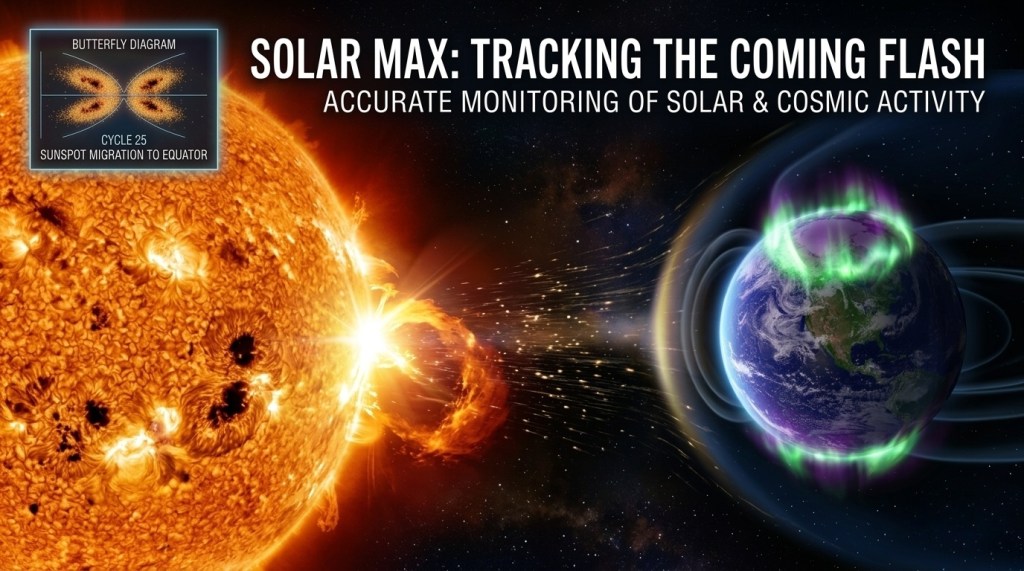
In this first amazing close-up, you’re not seeing a smooth surface. You’re seeing the Sun’s photosphere – that’s just a fancy word for “visible surface.” See how it looks all grainy, like bubbling oatmeal? That’s actually super-hot, glowing plasma, and each of those “grains” is about the size of Texas!
But what are those big, dark spots? They are called sunspots. Scientists like to call them “magnetic bruises.” They look dark because they are a little bit cooler than the rest of the Sun. Why are they cooler? Because the Sun’s magnetic fields (which are like giant invisible rubber bands) are all tangled up in those spots, choking off the heat that wants to bubble up.
So, when you see a sunspot, you’re looking at a place where the Sun is incredibly magnetic and very, very active!
The Great Solar Migration
Okay, so the Sun gets these “bruises.” But do they just appear randomly all over the place? Nope! They follow a very specific pattern, and this is where it gets really cool. The Sun has a rhythm, kind of like a heartbeat, that lasts about 11 years. We call this the Solar Cycle.
In our next video, you’ll see how this works.
Did you see how the spots started near the Sun’s North and South Poles and then, as time went on, they started appearing closer and closer to the middle – the Sun’s “belly button” (the Equator)?
If you keep track of all the sunspots for an entire 11-year cycle and draw a picture, the pattern they make looks just like a butterfly’s wings! Check this out:
So why do we care where the spots are? Think about it this way: if a sunspot is high up near the North Pole, and it decides to “sneeze” (create a huge eruption), that eruption will blast over the top of Earth and shoot into deep space.
But when sunspots are in the “Direct Fire Zone” (near the Equator), they are aiming right at us! And that’s exactly where we are right now in Solar Cycle 25. The Sun is wide awake, and its sunspots are aims directly at Earth!
When the Sun Sneezes on Earth!
So, what happens when one of these sunspots in the “Direct Fire Zone” actually creates a huge explosion?
First, there’s a giant flash of light called a solar flare. But right after that, something even bigger can happen. The Sun can blast out a colossal, invisible cloud of electrified gas called a Coronal Mass Ejection (CME). It’s like a colossal space sneeze made of invisible particles!
Did you see our planet get hit by that wave of energy? We didn’t even feel it on the ground, and that’s thanks to our amazing magnetosphere! This is an invisible magnetic shield that acts like a gigantic umbrella, protecting our air and everything on the surface.
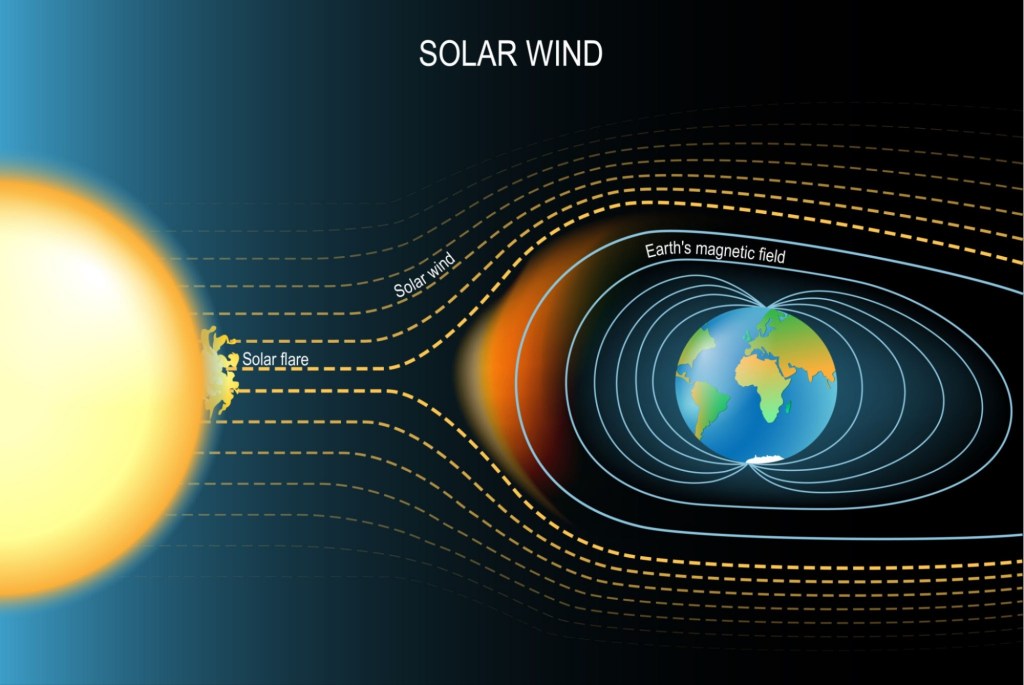
Most of the Sun’s storm gets deflected, but some of the energy slides down the sides of our shield and enters the Earth’s atmosphere at the North and South Poles. When those solar particles hit our air, they make it glow in beautiful, dancing colors. That’s what creates the aurora borealis (the Northern Lights)!
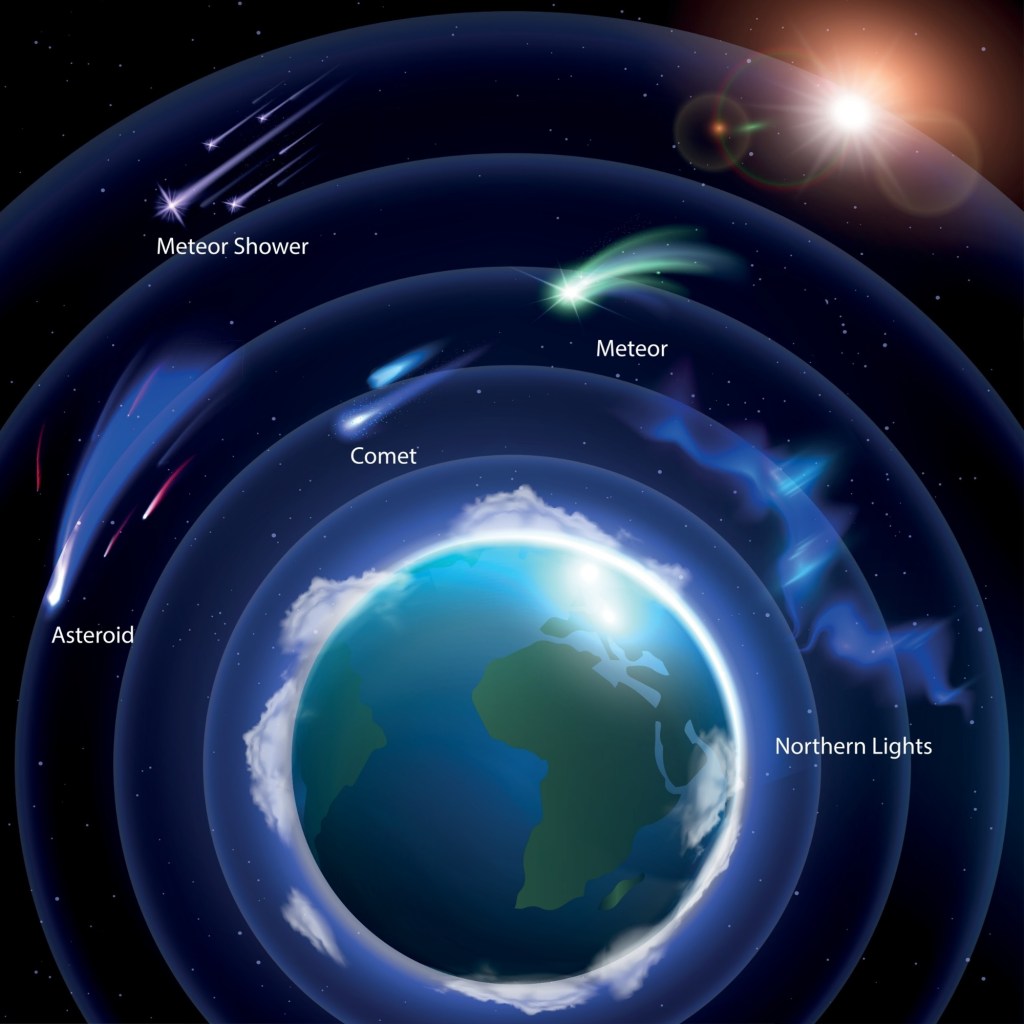
So, the next time you look at the Sun, remember: you’re not just looking at a steady lightbulb. You’re looking at a dynamic, stormy star that’s currently at its peak, aims right at us, and responsible for creating some of the most beautiful light shows on our planet! Pretty cool, huh?
 Explorers Lens: The Global Exploration Magazine