Welcome back, fellow explorers! In Part 1, we ventured into the depths of the Margate Shell Grotto, uncovering its hidden beauty and enigmatic symbols. Now, let’s delve deeper into the mysteries that surround this subterranean wonder…
A Labyrinth of Time: The Grotto’s History Unfolds
Whispers from the Depths: Unraveling the Enigma of the Margate Shell Grotto
Embark on a journey with me, dear reader, to the windswept shores of Margate, England, where a hidden world awaits beneath the chalk cliffs. Our story begins not with a labourer’s lost spade but with whispers of a different kind. Some accounts say that a young boy named Joshua and his sister, driven by an insatiable curiosity, were the first to stumble upon the entrance to the grotto. They spoke of a subterranean realm, millions of shells shimmering like stars in the darkness. Frances Newlove, also known as “Fanny,”was around 12 years old when the events she recalled below occurred. She took over the running of the Grotto just before her father James’s death and was proprietor for a number of years.
“My brother, Joshua, found the underground grotto before anyone knew about it. He found loose chalk at the end of a passage leading from our cottage and widened the opening by taking out the chalk in rough blocks. When it was wide enough, he crawled through and got into the grotto.
I did too, along with two or three other young girls. We crept in through the opening and had to scrub ourselves clean because of the dirty chalk. We made a mess of ourselves! But we got in and saw it all; we had to take a candle in a lantern around somebody’s neck.
But it was really discovered in 1837, and my brother was dropped down the Dome with a light. He had been through it before, but had not told father.”
The Secret Passage To Wonder: The Story of Joshua and his sister Fanny
It was only later, the story goes, that a laborer, toiling away in the field, found his spade sinking into the earth, swallowed by an unseen void. News of this strange occurrence reached James Newlove, the master of the nearby Dane House School, and Joshua’s father. A scientist and a keen observer of the world, Newlove was intrigued. With a mix of curiosity and perhaps a touch of daring, he decided to investigate.
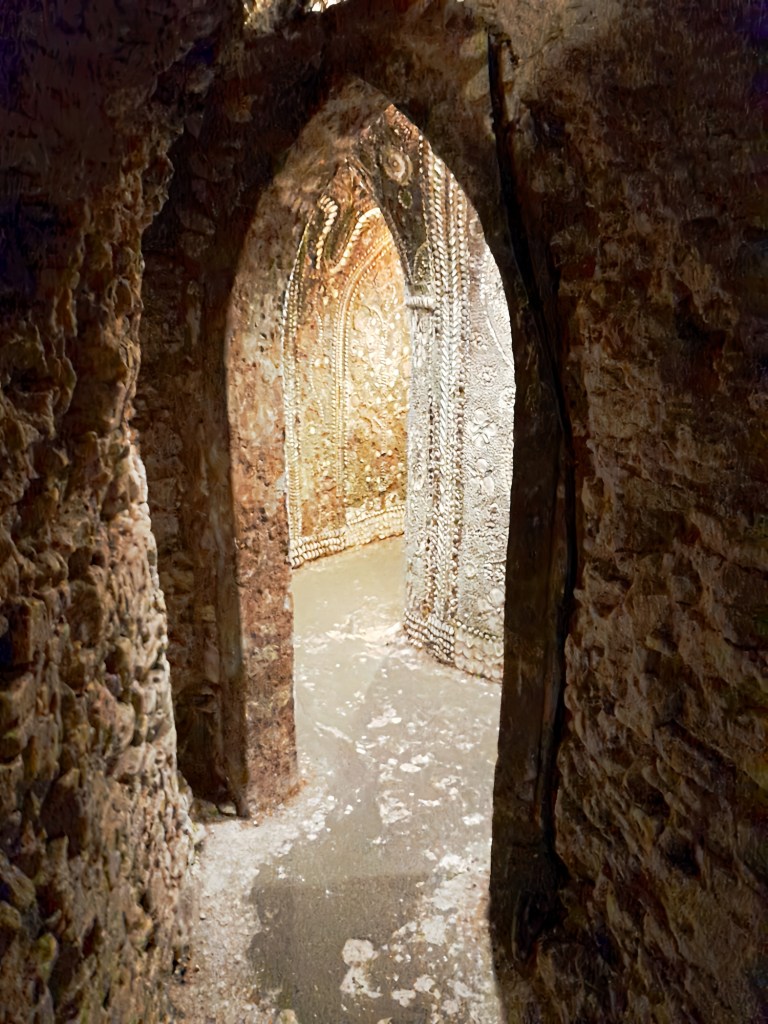
Now, here’s where the story takes an interesting turn. Originally, the entrance passage was quite small, only about four feet high! Can you imagine squeezing through such a tiny space? To make the grotto more accessible to the public, James Newlove had the entrance enlarged. This work was likely done by a local builder named Stephan Wales.
But that’s not all Newlove did to prepare the grotto for visitors. He also:
Created a New Entrance
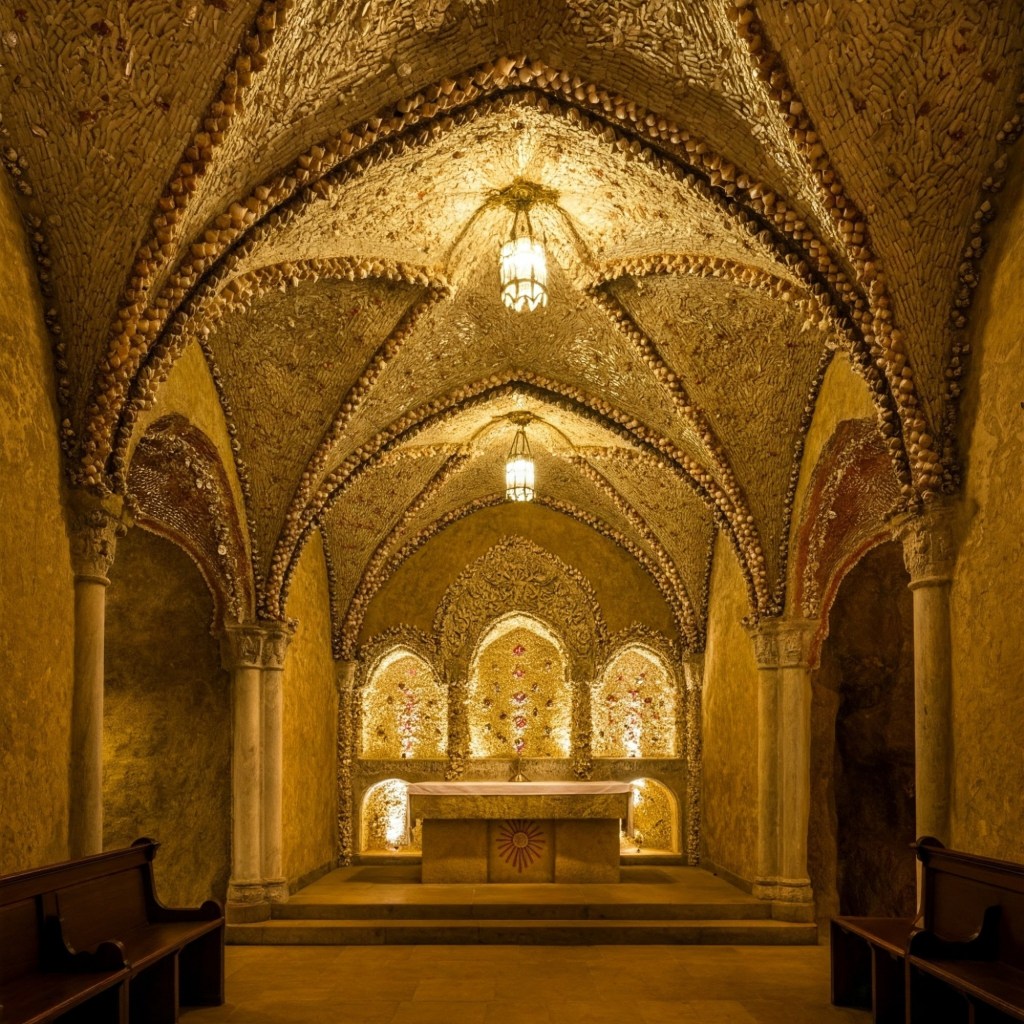
To make it easier for people to enter, Newlove created a horizontal entrance leading directly into the altar chamber from the side of the hill. Or did he? Author Nigel LeGear from the Kent Archaeological Society proposes a fascinating alternative: what if Newlove simply reopened an existing, sealed passage hidden behind what appears to be a “false door”? This raises intriguing questions about the grotto’s history before its discovery.
Added Gas Lighting
To illuminate the grotto’s beautiful mosaics, he installed gas lighting throughout the tunnels. Imagine the gaslight casting flickering shadows on the shimmering shells!
Removed the Vaulted Ceiling
The removal of the vaulted ceiling is perhaps the saddest change. The Altar Chamber is said to have originally had a vaulted ceiling, also decorated with shells. Sadly, this was removed, possibly to make way for a schoolroom built above the grotto. Adding to the misfortune, sketches of this vaulted ceiling made by a Mr. Mercer were lost when the Margate library moved. Imagine the secrets those sketches might have held!
Sealed the Horizontal Entrance
When the schoolroom was built and the vaulted ceiling removed, the horizontal entrance that Newlove had (possibly reopened) was sealed up.
These alterations show how Newlove adapted the grotto for public viewing, but they also highlight the challenges faced in preserving its original features. The loss of the vaulted ceiling, in particular, seems like a significant change that may have altered the overall experience of the grotto.
And here’s one more puzzle piece to ponder: the Entrance Passage itself might have been intentionally left unfinished by the original creators. The full-height archway connecting the passage to the Rotunda contradicts the initial description of the passage as only four feet high. This hints at a potentially abandoned plan or a change in purpose during construction.
It’s worth considering the sheer skill and planning involved in creating the grotto. LeGear emphasizes the expertise needed to navigate the chalk and create the complex layout, suggesting it was more sophisticated than a simple chalk mine.
Despite these changes, the grotto remains a place of wonder and mystery. Armed with a candle and a length of rope, young Joshua was lowered into the depths. He emerged not just with a dusty face and a flickering candle, but with a tale that would echo through the ages. He described a breathtaking spectacle—a hidden chamber, its walls and ceilings adorned with intricate mosaics formed by millions of shells, a sight that would forever be etched in his memory.
A shrewd man with an eye for opportunity, Newlove recognized the potential of this remarkable discovery. Swiftly acquiring the land above the grotto, he set about transforming it into a public attraction. In 1837, just two years after its unveiling, the Margate Shell Grotto opened its doors to a curious public eager to witness the subterranean wonder.
A testament to the enduring power of the unknown, the grotto’s origins remain shrouded in mystery over 180 years later. Descend with me into the heart of this enigma. As you navigate the labyrinthine passages, feel the cool, damp air caress your skin, each turn revealing a new facet of this subterranean marvel.
A Symphony of Shells: A Visual Feast
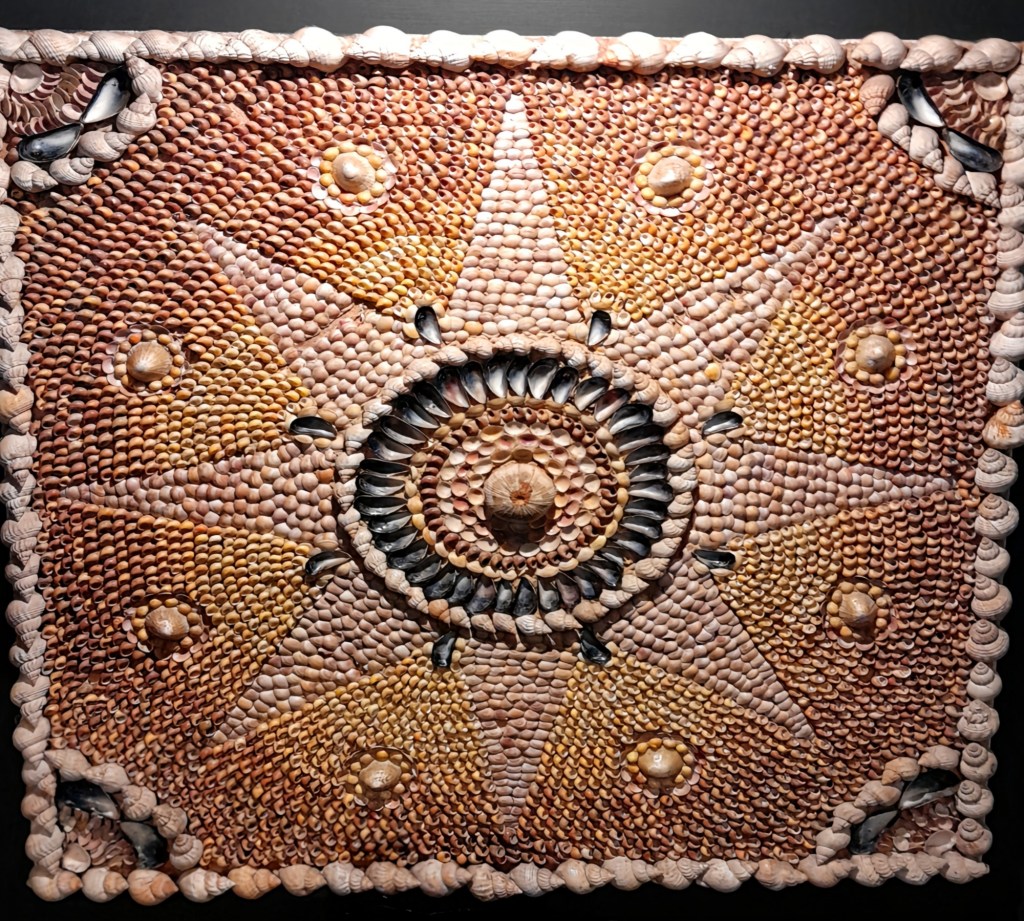
Prepare to be mesmerized by a symphony of shells adorning the grotto’s walls. Some estimate there are 4.6 million shells. Their iridescent surfaces catch the faint light, creating an ethereal glow that dances and shifts with every step you take. Meticulously placed mussels, cockles, whelks, limpets, scallops, and oysters form intricate mosaics that seem to whisper secrets of a forgotten past. Are these simply patterns, or a deeper meaning, a hidden language waiting to be deciphered?
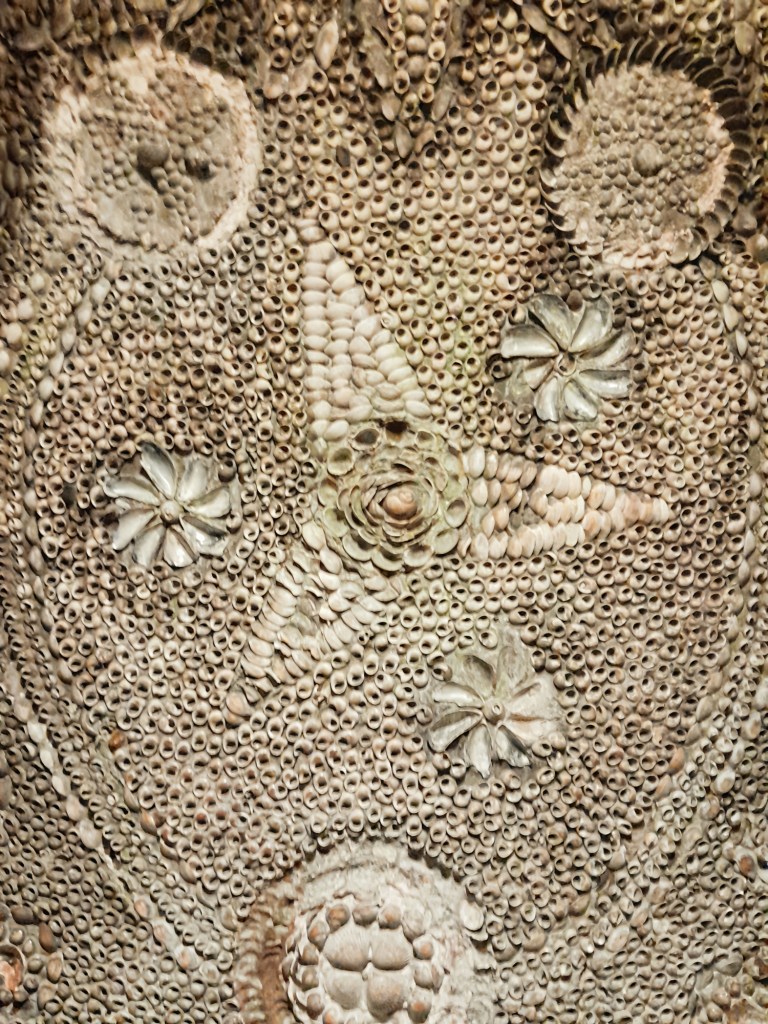
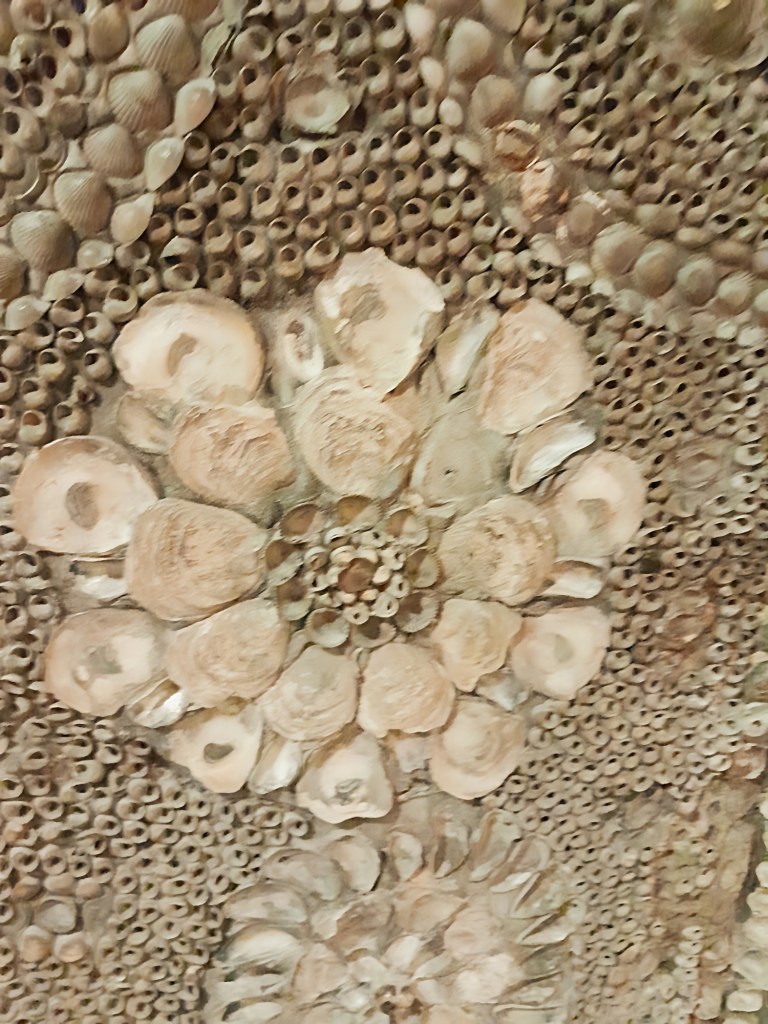
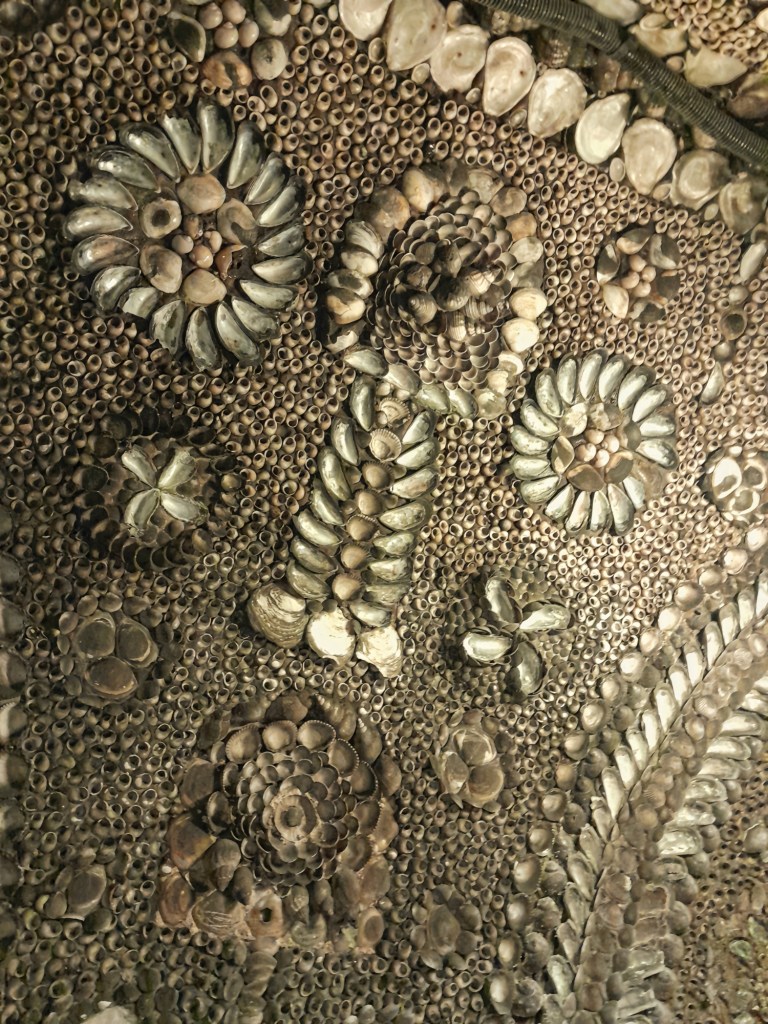
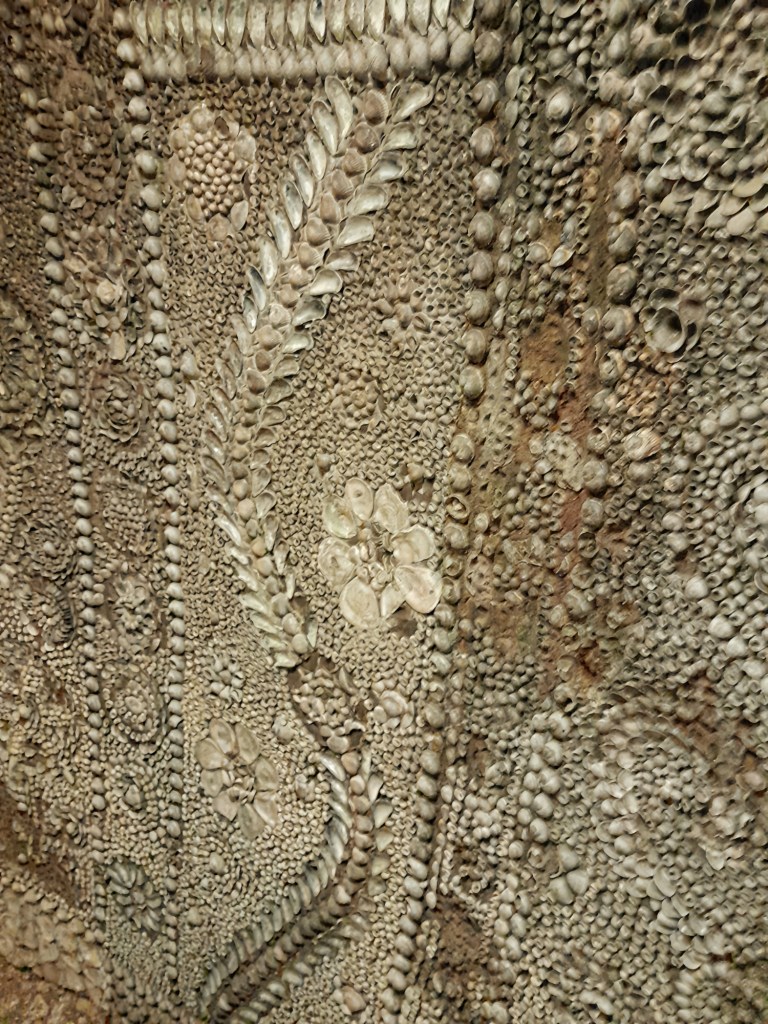
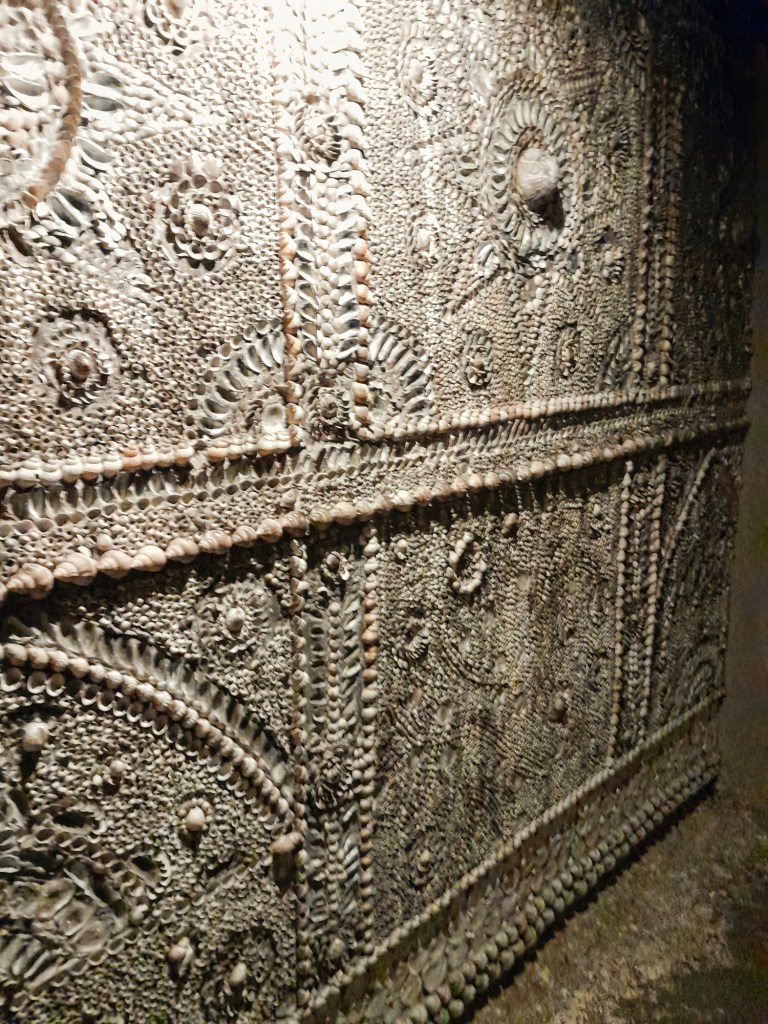
The sheer number of shells used to create these mosaics is astounding. Many are local varieties. However, the abundant flat winkles are less common in the area, suggesting they were brought from further afield, perhaps even from the shores near Southampton. This discovery raises questions about the logistics and resources involved in the grotto’s creation.
But there’s another intriguing twist to this tale. In 1804, another grotto was discovered in Margate near the High Street, about 0.6km away from the Shell Grotto we know today. Sadly, this “High Street Grotto,” featuring a dated inscription from 1612 and religious imagery, no longer exists. However, the thought of two such unique structures in Margate is fascinating! What secrets did the “other” grotto hold? Were they connected in any way?
Whispers of Ancient Orders and Celestial Secrets
Since its emergence, the grotto has been a magnet for speculation and debate. Theories about its origins abound, vying for a place in the spotlight.
A Grand Souvenir?
Some suggest that a local dignitary, returning from a European Grand Tour, was inspired to recreate the shell grottos popular in 18th-century Europe. However, the lack of any associated grand estate casts a shadow of doubt on this theory.
A Smuggler’s Haven?
Some have also proposed the grotto served as a secret hideout for smugglers. Yet, the absence of connecting tunnels to the coast and escape routes makes this theory improbable. Besides, would smugglers dedicate themselves to such elaborate decoration?
A Roman Relic?
Could this be the remnants of a Roman temple, a testament to their presence in Britain? There’s no concrete evidence to link the Romans directly to the grotto despite their mark on the region.
A Templar Treasure?
In 2006, Mick Twyman of the Margate Historical Society put forth a captivating theory. He suggested the grotto was the work of the Knights Templar, a medieval order shrouded in mystery.
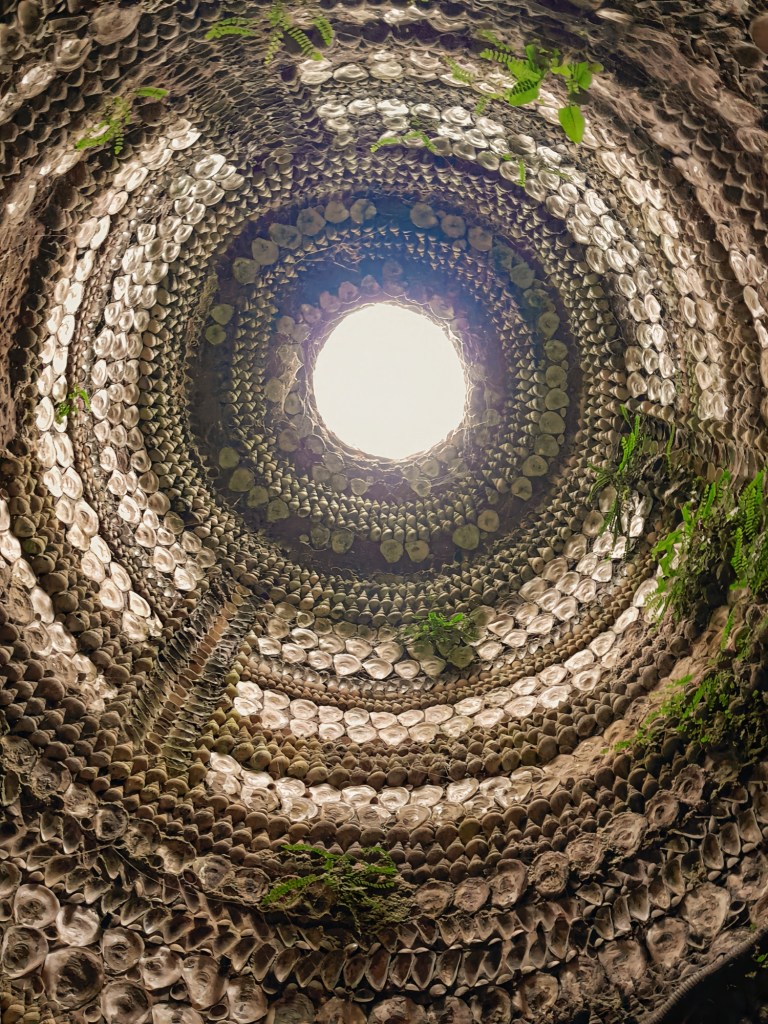
A recent study by the Kent Archaeological Society guides us through this labyrinth of time and mystery. Meticulously compiled, this study suggests that the grotto may have begun its life as a humble denehole, a chalk mine carved out by laborers toiling in the dim light. But could this utilitarian space have transformed into the subterranean spectacle we see today?
The study also points to a possible connection with the Knights Templar, enigmatic figures shrouded in myth and legend. Researcher Mick Twyman proposes a tantalizing theory. He suggests that the grotto’s alignment, angles, and the way sunlight interacts with the structure might hold clues to a Templar presence. Beneath the watchful eyes of the shimmering mosaics, could this be a secret meeting place, a hidden sanctuary where ancient rituals were performed?
Twyman adds to the intrigue, suggesting the dome, reaching towards the heavens, may have functioned as a solar calendar. Aligned with the sun’s movements, its design could have marked solstices and equinoxes. Did the builders possess ancient astronomical knowledge, connecting with the celestial dance above through the grotto?
But what if the grotto’s story goes even further back in time? It’s fascinating to consider that the Isle of Thanet was once an island, separated from mainland Britain by the Wantsum Channel, which didn’t close until around the 16th century. This raises the intriguing possibility that the grotto, or at least its initial construction as a denehole, could date back to Thanet’s time as an island. Could the grotto’s creators have chosen this secluded island for a specific purpose? Did the island’s isolation play a role in the grotto’s mysterious origins?
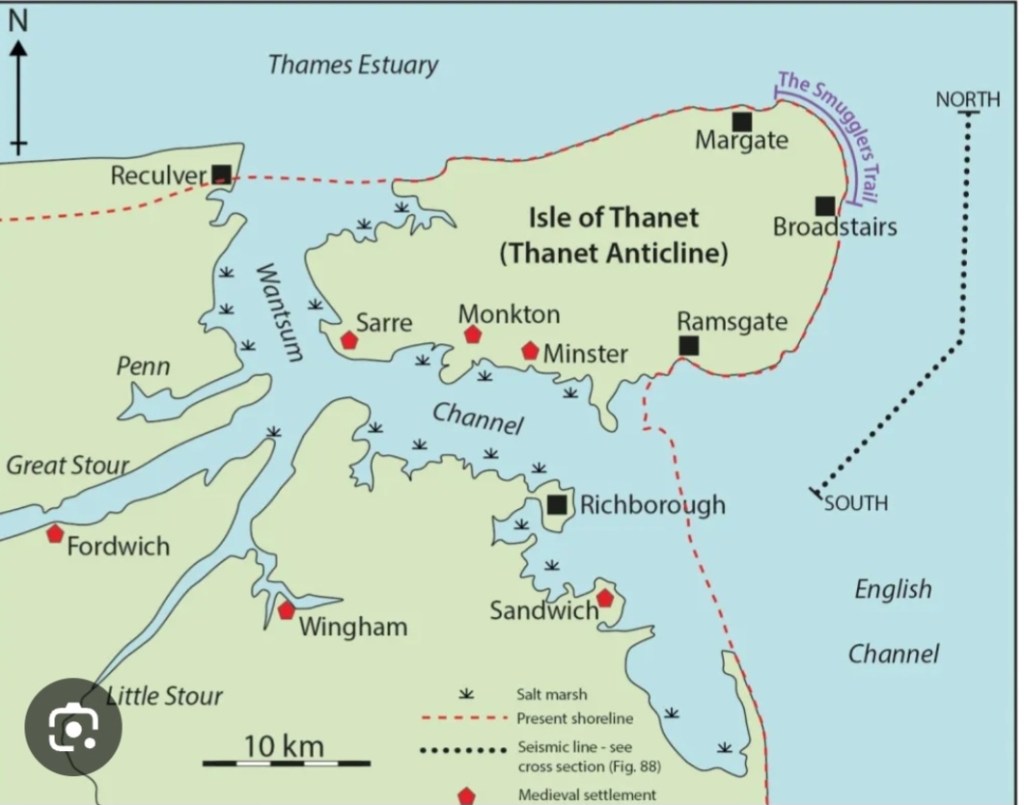
The isolation of an island could have provided a secluded location for a group to construct the grotto, whether for religious, ritualistic, or other purposes. Furthermore, being an island would have made access by sea easier, potentially allowing for the transportation of shells from further afield, as evidenced by the abundance of flat winkles, a variety less common in the Margate area.
However, it’s important to remember that the grotto may have been expanded and decorated later, possibly in the 17th or 18th century when Thanet was no longer an island. This means that at least some of the construction occurred after the channel closed. And while the idea of the grotto’s connection to Thanet’s island past is captivating, there’s no direct evidence within the grotto itself to confirm it.
Ultimately, whether the grotto was initially constructed during Thanet’s time as an island remains an open question. It’s a plausible scenario that adds another layer of intrigue to the grotto’s history. Further research and analysis might reveal more clues to help pinpoint the exact timeline of its construction and its connection to the island’s past.
A Tapestry of Time: Layers of Mystery
The grotto’s history is a palimpsest of layers of change and adaptation. Whispers of a past shrouded in mystery echo from a lost entrance, a winding Serpentine Passage adorned with shells, and the enigmatic Altar Chamber with its hints of Masonic symbolism.
What if those whispers tell us more than we imagine? What if they hold clues to a connection far older than we suspect, a link to the earliest inhabitants of this land? Could the prehistoric people who roamed these shores have played a role in the grotto’s creation by carving out the initial denehole or adding their own symbols and stories to the mosaic tapestry?
The Enigma Unfolds
Patricia Jane Marsh, in her book “The Enigma of the Margate Shell Grotto,” challenges the folly theory, arguing that the grotto’s scale and complexity point to a more profound purpose. She explores fascinating connections to ancient nymphaea, sacred grottos dedicated to water nymphs, suggesting the builders drew inspiration from classical traditions.
Marsh also delves into the symbolism of the shell mosaics, identifying recurring motifs like the Tree of Life and other symbolic symphonies. Stars, celestial bodies, intricate geometric patterns, stylized animals, and floral motifs adorn the grotto’s artwork.
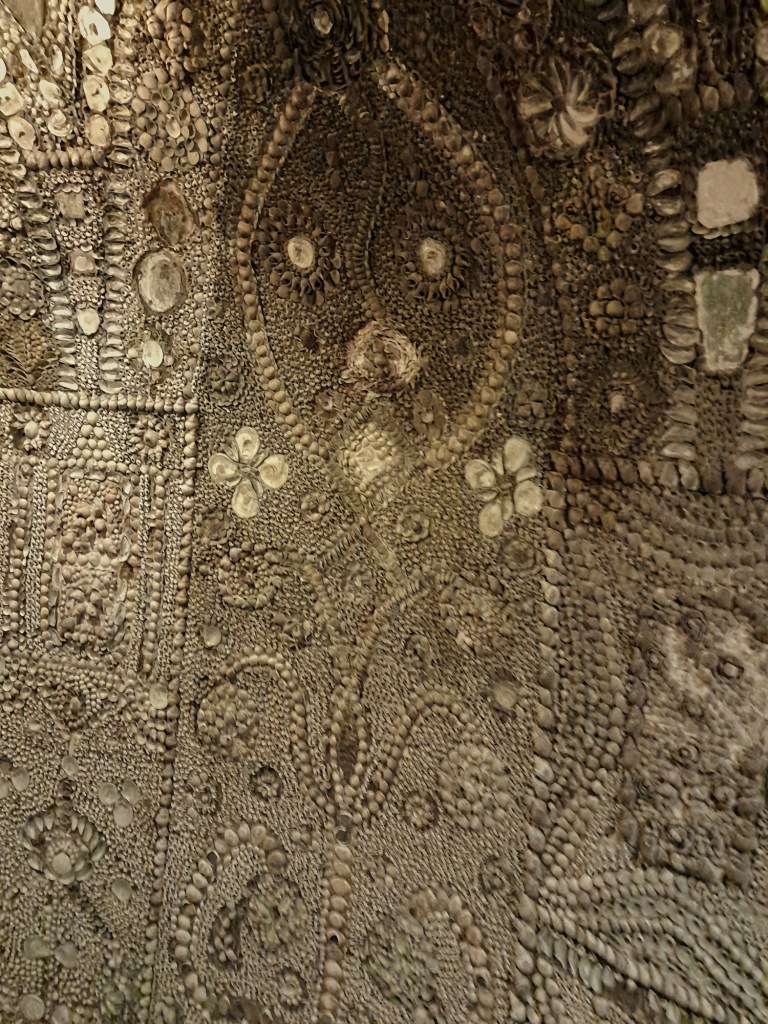
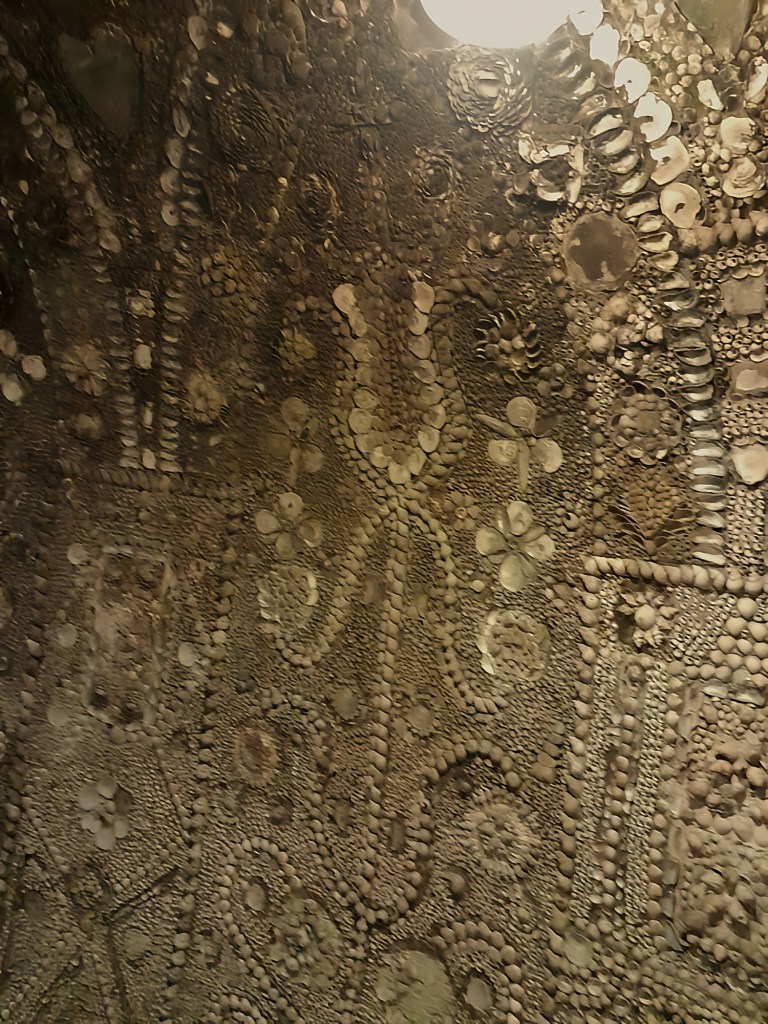
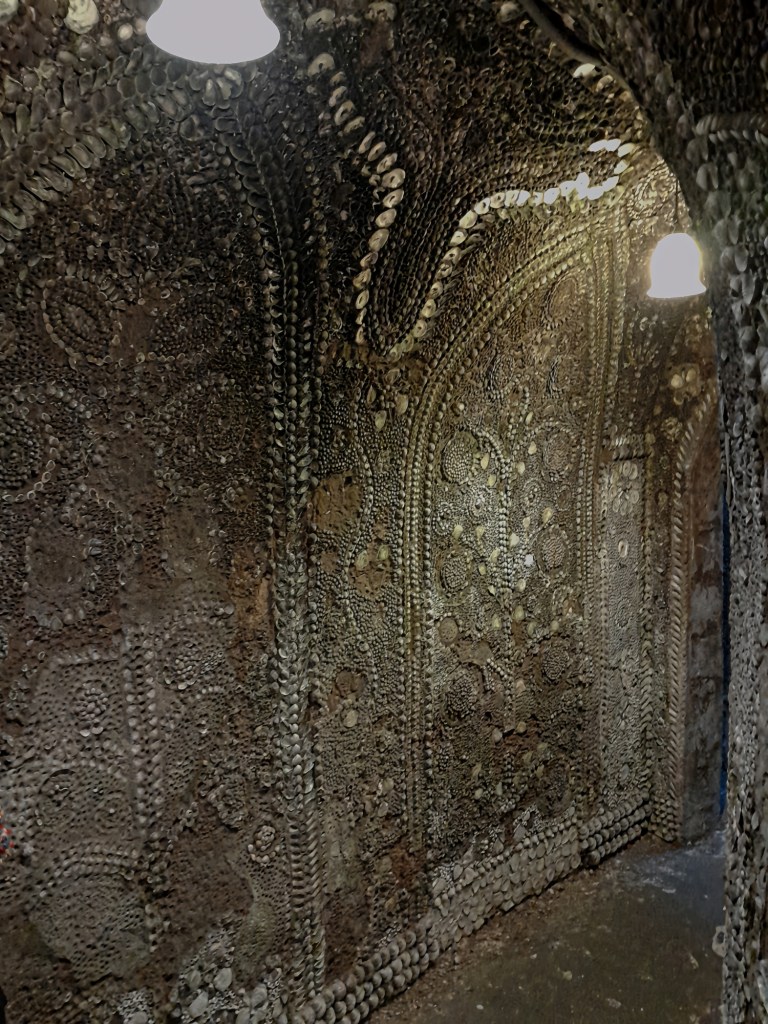
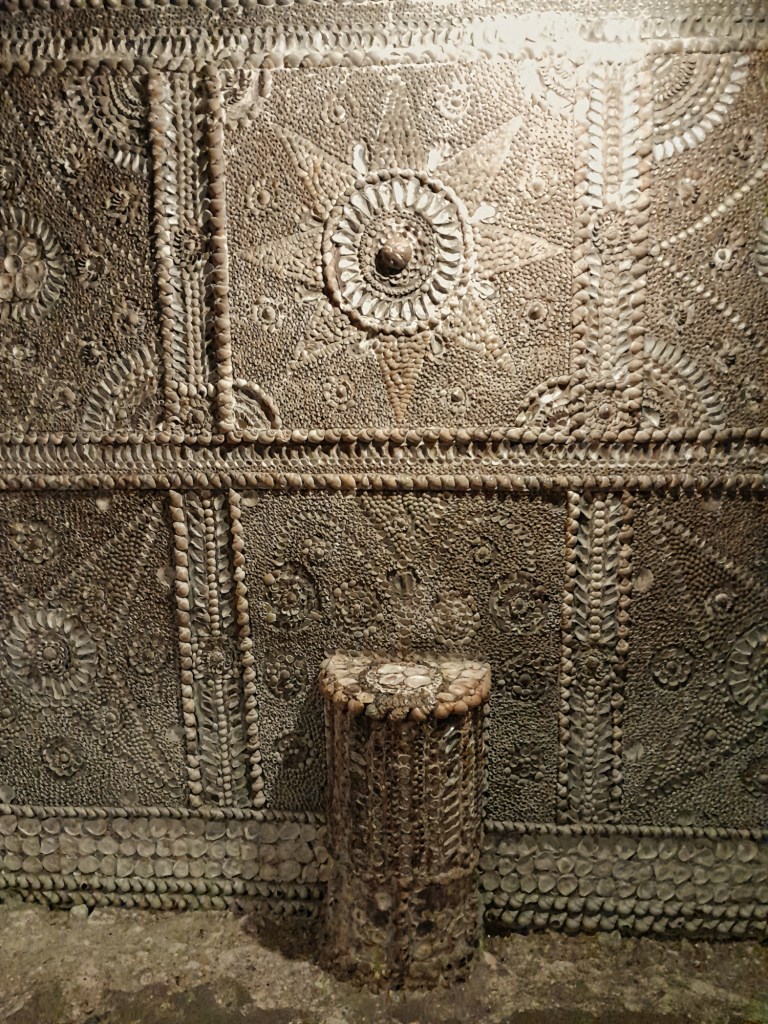
These symbols contribute to the rich tapestry. Could these be more than decorations? Might they hold symbolic significance related to sacred geometry, mathematical principles, or hidden codes?
A Portal to Another World? A Secret Passage to the Unknown?
What if the grotto is more than a beautiful space, a hidden sanctuary, or a testament to human artistry? What if it’s a gateway to another realm, a celestial portal for humans to access other worlds, other dimensions? Or perhaps a secret passage leading to a hidden chamber filled with treasure, artifacts, or ancient texts?
The possibilities are endless, fueling our imaginations and inviting us to explore the depths of this subterranean mystery. Could the grotto have been used by smugglers, their illicit cargo transported through secret tunnels beneath the town? Or maybe it was a refuge for religious dissenters, seeking a place to practice their faith in secret? The grotto’s lost entrance and blocked passages add another layer of intrigue, hinting at a network of tunnels and hidden chambers waiting to be discovered.
The Knights Templar: Guardians of Treasure and Secrets?
But let’s return to the Knights Templar, those enigmatic warriors shrouded in myth and legend. Could their connection to the grotto be more than just a meeting place or ritual site? What if they used this hidden sanctuary to safeguard their most valuable possessions or their most closely guarded secrets?
Imagine a hidden chamber behind the blocked passage, filled with chests overflowing with gold and jewels, the spoils of their crusades and their vast financial network. Or perhaps the grotto holds something far more valuable than gold—ancient scrolls containing forbidden knowledge, maps leading to lost relics, or even the key to unlocking the mysteries of the Holy Grail.
The Templars were renowned for their wealth and influence, but they were also rumored to possess esoteric knowledge and artifacts, some said to be acquired during their time in the Holy Land. Could the grotto have been a repository for these secrets, a place where they could study and protect them from prying eyes? The possibility is tantalizing, adding another layer of intrigue to the grotto’s already captivating story.
A Conspicuous Absence: The Mystery of Missing Christian Symbolism
One of the most perplexing aspects of the Shell Grotto is the conspicuous absence of Christian symbolism. Despite its intricate mosaics and potential ritualistic purpose, there are no crosses, biblical figures, or saints to be found. This is particularly striking given that Christianity was the dominant religion in England for centuries before the grotto’s estimated construction date.
This absence raises intriguing questions. Does this suggest a pre-Christian origin, a connection to secret societies with their own unique symbols, or perhaps a personal expression of beliefs that diverged from mainstream Christianity?
Perhaps the Templars, despite their Christian affiliation, were privy to esoteric knowledge or hidden traditions that diverged from mainstream religious practices. Could the grotto have been a place where they explored these alternative beliefs, their rituals and symbolism reflecting a unique blend of influences? Or perhaps the grotto predates the Templars altogether, its origins rooted in a more ancient, pagan past, with the Templars later adapting the site for their own purposes.
The absence of Christian symbolism deepens the grotto’s mystery, challenging our assumptions about its creators and their beliefs. It invites us to delve deeper into the rich lore surrounding the Knights Templar, their rumored connections to secret knowledge, esoteric traditions, and even accusations of heresy. Could the grotto be a testament to a hidden chapter in Templar history, a place where they explored the boundaries of faith and knowledge?
The Templar And The Hidden Chamber: The Story of Gideon
Could this be a Pagan Shrine?
The grotto’s secrecy, hidden location, and enigmatic symbols have led some to speculate that it might have been a pagan shrine. Could this be a place where ancient rituals were performed, honoring forgotten gods and goddesses? The presence of the Tree of Life, a symbol with deep roots in pagan traditions, lends credence to this theory.
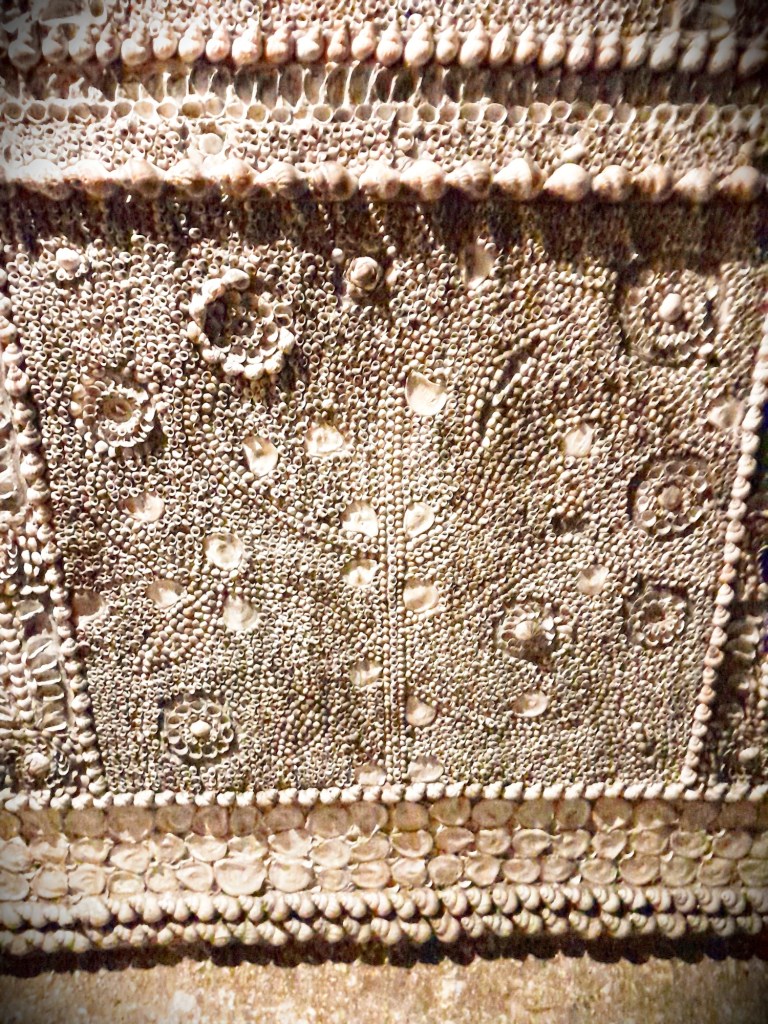
Imagine the grotto illuminated by flickering torchlight, the air thick with incense and the chanting of ancient prayers. Could the Altar Chamber, with its mysterious aura, have been a focal point for ceremonies and offerings? Perhaps the mosaics themselves hold clues to the beliefs and practices of those who once gathered in this subterranean sanctuary.
Rites and Sacrifices?
Could the grotto have been a site of ritualistic practices, perhaps even involving sacrifices? Were the Templars, or perhaps the grotto’s original creators, conducting ceremonies within its hidden depths?
The Phoenician Connection and the Tree of Life?
Adding another layer to this intricate tapestry is the possibility of Phoenician influence. These ancient seafarers, known for their maritime expertise and trade networks, may have introduced the concept of the Tree of Life to the region. Could the grotto be a hidden vestige of their presence, a testament to their far-reaching influence and cultural exchange?
It’s important to note that while the Phoenician connection is intriguing, it’s based on speculation and interpretation rather than concrete evidence. There’s no direct archaeological evidence to confirm a Phoenician presence in Margate or a direct link to the Shell Grotto. However, the possibility adds another layer of intrigue to the grotto’s story, inviting us to consider the diverse cultural influences that might have shaped its creation.
A Mithraic Temple?
Adding to the tapestry of theories, some researchers have proposed a connection between the grotto and the ancient mystery religion of Mithraism. Mithras, a popular deity in the Roman Empire, was often associated with the sun, bull-slaying, and the struggle between light and darkness. Several aspects of the grotto align with characteristics of Mithraic worship: its subterranean location mirrors the typical Mithraeum (Mithraic temple) built underground or in caves; the potential use of the grotto as a solar calendar connects to Mithras’ solar associations; and some researchers even suggest that the shell mosaics might contain hidden symbols related to Mithraic beliefs. While this theory remains speculative due to the lack of direct evidence, it offers a captivating possibility that adds another dimension to the grotto’s mystery.
Preserving a Fragile Wonder
As we marvel at the grotto’s beauty, we must also acknowledge the fragility of this subterranean treasure. A 2013 conservation project, detailed in the “Journal of Architectural Conservation,” highlights the efforts made to preserve this delicate environment. Experts carefully analyzed the grotto’s structure, reinforced the bedrock, improved drainage, and meticulously cleaned and repaired the shell mosaics, ensuring that its artistry would continue to inspire awe and wonder for generations to come. They even delved into the micro-level, analyzing the mortar used to affix the shells, ensuring the long-term stability of these intricate artworks.
The grotto has weathered its share of challenges over the years. Gas lighting, introduced to illuminate the shells, was replaced with electric lights in 1932. Water damage has bleached many shells, muting their once vibrant colors. But thanks to a dedicated conservation project in partnership with English Heritage, the grotto has been stabilized and restored, ensuring its beauty can be enjoyed for generations to come.
An Invitation to Explore
The Margate Shell Grotto stands as a testament to human ingenuity, artistry, and the enduring allure of the unknown. It invites us to delve deeper into its hidden history, to explore the depths of its enigmatic beauty, and to imagine the stories it holds. As we stand within its subterranean chambers, surrounded by the whispers of the shells, we are reminded that some secrets are meant to remain hidden, forever captivating our imaginations and inspiring a sense of wonder.
The combined efforts of researchers, archaeologists, and conservationists have ensured that this subterranean marvel will continue to enchant and intrigue visitors for generations to come. The Shell Grotto, with its intricate mosaics, mysterious origins, and enduring enigmas, remains a timeless treasure, a testament to the power of human creativity and the enduring allure of the unknown.
What mysteries do you think the grotto holds? Where do you think the secret passage might lead? What secrets do you think lie hidden beneath the mosaics? Share your thoughts and theories in the comments below!
 Explorers Lens: The Global Exploration Magazine
The illustartions depict a map of celestial interpretation between the Sun and the Moon and Mercury which is considered the Son in terms of religious figures and third one is the Star of Ishtar who the phoenicians as the supreme being and the source of all creation. Knight templars found a truth which later christians covered and were killed accordingly if they revealed the truth and exposed.
Your explorations have some very interesting insights. Keep digging !!
LikeLike